Clear scope before major work
You should receive a straightforward explanation of what is being removed, what is being dried, and why, with notes that match what is visible on site.
Serving Murfreesboro, Tennessee & surrounding areas
24/7 Emergency Response
One call instead of ten No web forms, no callback spam 24/7 Emergency Response
When property damage turns your day upside down, you need a clear plan and a crew that can stabilize the situation fast. We handle cleanup, drying, and repair coordination with careful documentation and practical guidance for insurance.
✓Skip the 3-hour Google rabbit hole — we’ve already done the vetting
✓One conversation, not ten voicemails and seven web forms
✓24/7 emergency response — talk to a real person who actually knows Murfreesboro
A real person answers - 24/7 Emergency Response
If you are searching for restoration Murfreesboro TN, you are usually dealing with a property that needs to be stabilized, documented, cleaned, dried, and brought back to safe, livable condition. The right approach depends on what happened, what materials were affected, and how long moisture had time to spread.
Restoration work often involves:
In Murfreesboro, delays matter. Once water gets into drywall, insulation, and subfloors, it can migrate behind baseboards and under flooring where it is hard to see. Fast response helps limit how much needs to be removed, but proper verification matters just as much. Drying a surface is not the same as drying a structure.
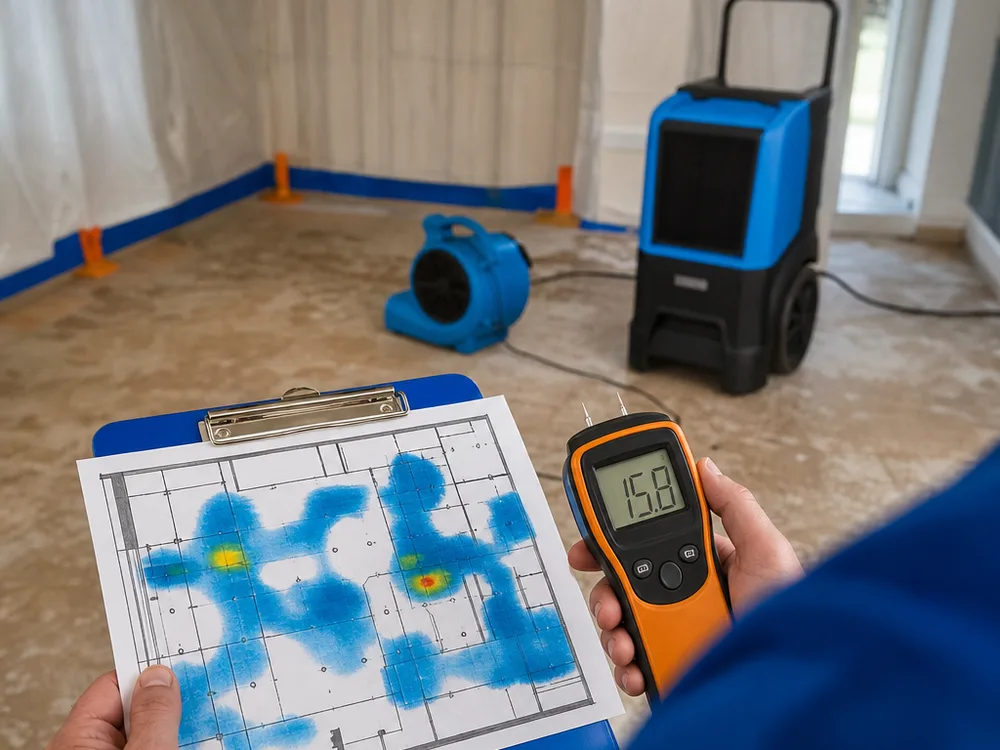
Every job starts with an on-site assessment and a written scope: what is affected, what needs to come out, what can be dried in place, and what the drying plan will look like. Our team uses moisture mapping to track progress, not guesswork.
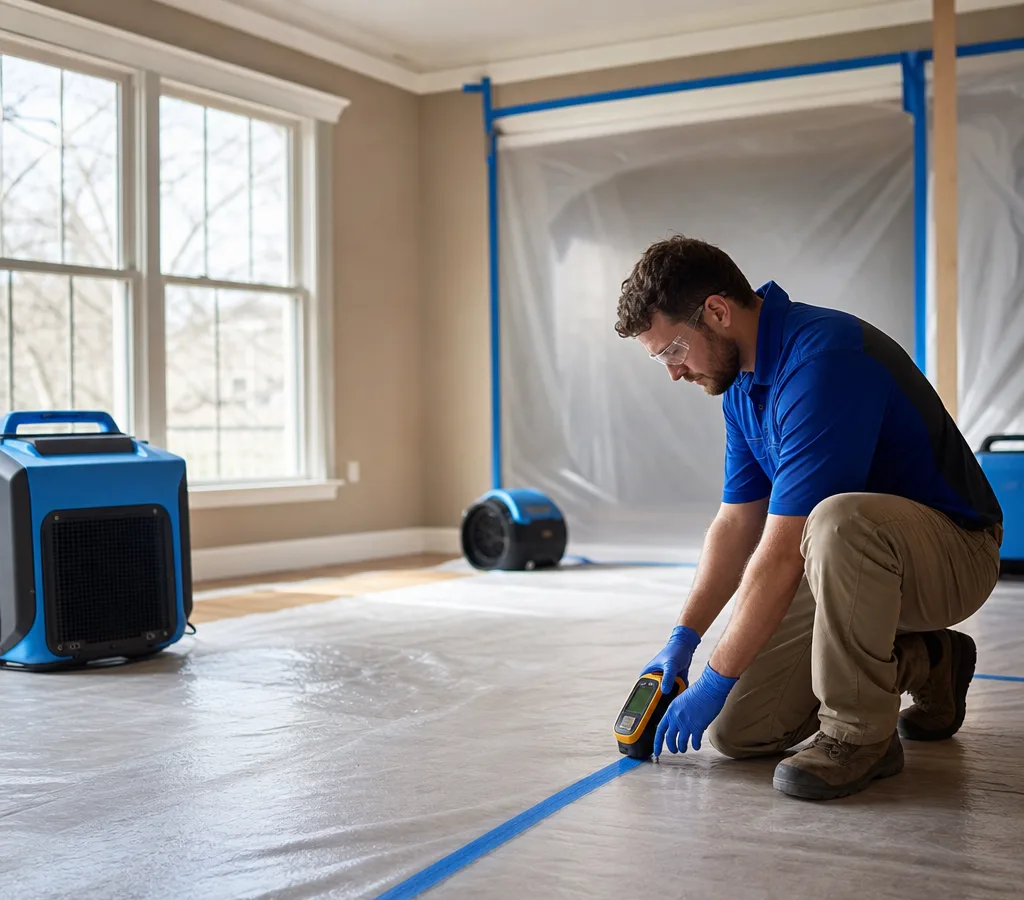
Stabilize and protect the property. We help secure the area, protect flooring and contents, and set containment if demolition or debris is involved.
Extract and dry. We remove standing water, then run controlled drying with dehumidification and air movement. We monitor and adjust equipment placement based on daily readings.
Clean and reset. If the loss involved contaminated water or heavy odors, we plan cleaning and deodorization steps that match the risk level.
Coordinate repairs. After drying is verified, we help you move into rebuild decisions so the property can return to normal use.
Water Damage Restoration Murfreesboro TN can walk you through the process and what to expect at each milestone.
You should receive a straightforward explanation of what is being removed, what is being dried, and why, with notes that match what is visible on site.
Drying should be tracked with moisture readings in affected materials, including checks of adjacent rooms and hidden cavities when conditions suggest spread.
Containment, floor protection, and HEPA filtration reduce dust migration during demo and cleanup, especially when drywall or insulation is involved.
Photos, moisture logs, and an itemized scope make it easier to explain what happened and what work was necessary.
A good plan accounts for access, occupant needs, and drying time so repairs can start as soon as the structure is confirmed dry.
Some materials can be saved, others cannot. You should hear the reasoning in plain terms, including any health or contamination concerns.
We assess affected rooms, check surrounding areas for migration, and document conditions with photos and moisture readings so the plan is based on measured data.
If the loss is ongoing, the first priority is stopping further damage and making the space safer to enter and work in.
When materials are swollen, delaminated, contaminated, or trapped between layers, selective removal is often the fastest way to dry the structure and prevent secondary damage.
We set equipment based on the layout and materials, monitor progress with repeat readings, and adjust airflow, dehumidification, or access points when a pocket stays wet.
Depending on what was affected, we may use HEPA filtration, appropriate antimicrobial products, and targeted deodorization to return the space to a clean condition.
Once drying targets are met, we document the final condition and outline the next repair steps so you can move forward confidently with rebuild decisions.
Restoration work is always job-specific, but a few Murfreesboro realities influence how we plan and pace a project.
Heavy rain events and storm-driven moisture can create multiple entry points at once. You might see water in a basement or crawlspace and also around windows, doors, or low wall penetrations. That is why we check adjoining areas instead of treating the visible puddle as the whole loss.
Homes and rental properties around MTSU, along major corridors like Old Fort Parkway, and in growing neighborhoods on the edges of town can have very different construction details and finish materials. Flooring type, cabinet bases, and the presence of insulation or vapor barriers all change whether a room can be dried in place or needs selective removal.
We also take traffic and access seriously. In busier parts of Murfreesboro, staging equipment and keeping walkways clear can be the difference between a job that stays on schedule and one that drags on. A restoration plan should include how occupants will move through the space, where equipment will run, and what areas need protection.
Most restoration projects in Murfreesboro typically fall between $1,200 and $7,500, with small, contained cleanups on the low end and multi-room drying and repairs on the higher end. A single affected room with extraction and drying is often $1,200 to $3,000, while projects involving demolition, specialty cleaning, and rebuild planning commonly run $3,000 to $7,500+.
Your price depends on the amount of water, how long it sat, what materials are affected, access to wet cavities, and whether contamination is involved. The exact cost is confirmed after an on-site inspection and a written scope.
“They explained what had to be removed versus what could be dried, and they backed it up with readings each visit. That made the whole situation a lot less stressful.”
“What I appreciated most was the documentation. The photos and notes matched what our adjuster asked for, and it kept the process moving.”
“The crew kept the work area contained and clean, even with equipment running for days. We could still live in the house while they finished the drying.”
Tell us what happened and what areas were affected. We will assess the situation, explain the next steps in plain language, and provide documentation you can use to move the claim and the repairs forward.
A real person answers - 24/7 Emergency Response